
Phraya Nakhon Cave: The royal pavilion, near Hua Hin
Phraya Nakhon Cave had been on my must-see list for ages, so when we booked a week in Hua Hin, I knew we had to finally make the trip.
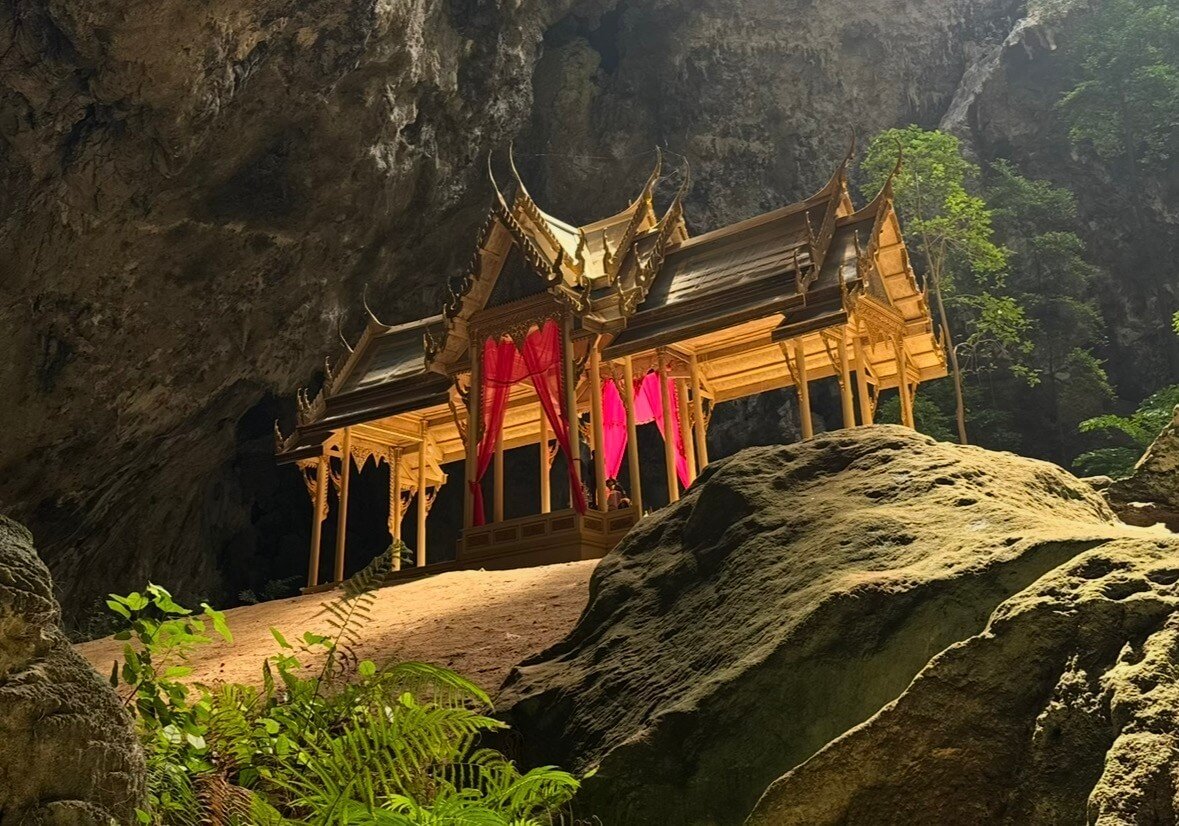
Hidden inside Khao Sam Roi Yot National Park, about an hour south of Hua Hin, the cave is famous for what many describe as a temple inside a cave. Technically, it’s a royal pavilion rather than a temple, sitting beneath an enormous opening in the limestone roof.
I’d seen plenty of photos, but nothing quite prepared me for seeing it in person. We were also lucky enough to have the cave almost entirely to ourselves for about 15 minutes, which made the experience even better.
Getting there involves a bit of effort, particularly if you decide to hike the entire way as we did, but this ended up being one of my favourite experiences in Thailand.
What is Phraya Nakhon Cave?
Phraya Nakhon Cave is located in Khao Sam Roi Yot National Park in Prachuap Khiri Khan province, approximately 52 km south of Hua Hin.
Despite its name, calling it a cave is a little misleading.
Over millions of years, sections of the limestone roof collapsed, leaving behind two enormous chambers open to the sky. Sunlight pours through the openings, allowing trees and other vegetation to grow inside.
The main attraction is the Khuha Kharuehat Royal Pavilion, a small, beautifully decorated pavilion built in 1890 during the reign of King Rama V.
It sits in the second chamber, surrounded by towering limestone walls and tropical vegetation. When the sunlight comes through the opening above, it illuminates the pavilion.
It’s a remarkable sight and the reason so many people make the hike to see it.
Phraya Nakhon Cave
📍 Location: Khao Sam Roi Yot National Park, Prachuap Khiri Khan (approx. 1 hour from Hua Hin)
🎟️ Entry: 200 THB per adult (national park admission; boat additional)
🕒 Opening hours: Daytime access, subject to national park conditions
🥾 Best for: Hiking, nature, photography and unique attractions
📍 Google Maps: Phraya Nakhon Cave


Getting to Phraya Nakhon Cave from Hua Hin
We arranged a private driver from Hua Hin for 1,800 THB, which included the return journey and waiting time while we explored the cave.
I’ll admit I was initially a little hesitant about paying that much for transport, particularly when the drive was only about an hour each way.
But by the time we returned from the hike, hot, sweaty and ready for a shower and brunch, I was very pleased we’d booked him.
Knowing our driver was waiting at the car park and we could head straight back to Hua Hin was worth every baht.
We left early in the morning, hoping to reach the cave before the worst of the heat and, ideally, before too many other visitors arrived.
I’d also read that the best time to see sunlight illuminating the pavilion was before 11 am, so we wanted to give ourselves plenty of time.
The drive from Hua Hin to Bang Pu Beach took approximately an hour.
This is where you park and begin the journey to Phraya Nakhon Cave.
Hiking to Phraya Nakhon Cave
There are two stages to reaching the cave, and depending on how much walking you want to do, you can make the first part a little easier by taking a boat.
From Bang Pu Beach, you can either take a short boat ride around the headland to Laem Sala Beach or hike over the hill.
Once you reach Laem Sala Beach, everyone has to tackle the final climb to the cave.
Bang Pu Beach to Laem Sala Beach
We opted to hike rather than take the boat. Of course we did. I was counting this as an active rest day!
The first hike takes around 30 minutes, following a trail over the headland before descending to Laem Sala Beach.
It’s a combination of stairs, rocky paths and uneven tracks, with some lovely views of the coastline along the way.
It was definitely sweaty, even early in the morning, but nothing too difficult if you’re reasonably fit.
There are a few spots where you can stop for photos and enjoy the views before continuing down to the beach.
Laem Sala Beach is also where you’ll find some basic facilities, including toilets, food and drinks.
If you’re not keen on doing the additional walking, the boat is an option, although it’s worth checking whether it’s operating before you arrive, as services depend on sea conditions.

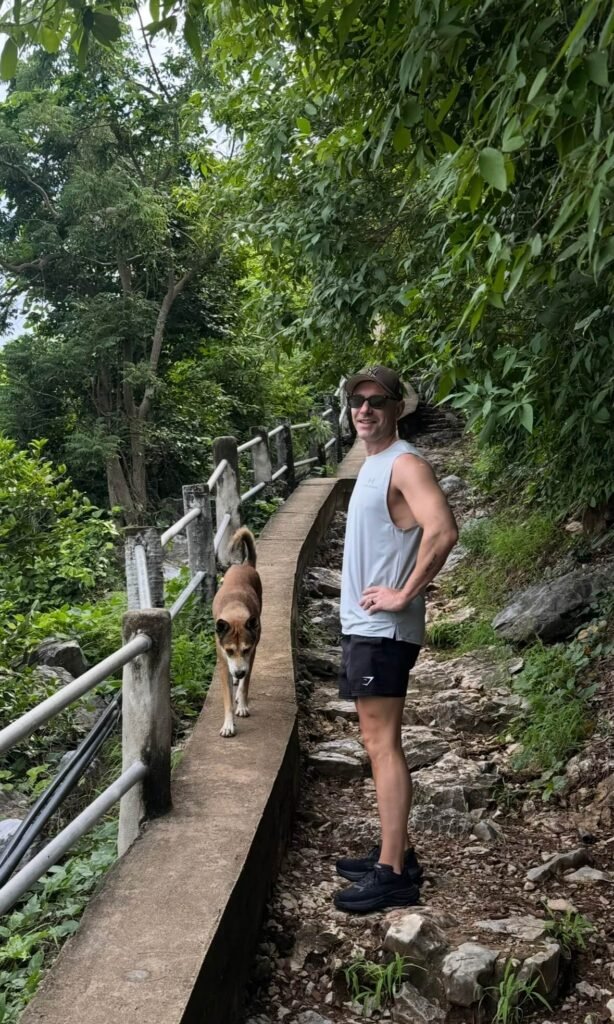
The Final 430-Metre Climb to Phraya Nakhon Cave
From Laem Sala Beach, the real climb begins.
The trail to Phraya Nakhon Cave involves a steep ascent of approximately 430 metres along a rugged limestone path.
Don’t confuse that with an easy 430-metre walk!
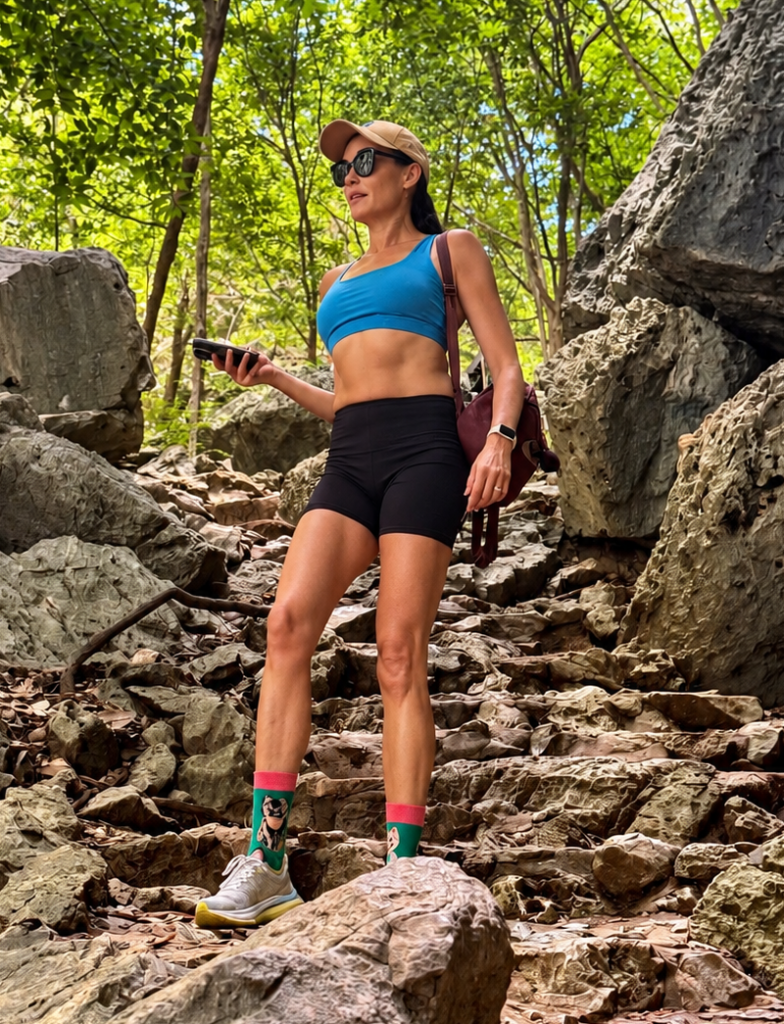
The trail is made up of uneven stone steps, sharp limestone, tree roots and sections of slippery rock. There are ropes to help with some of the steeper parts.
It took us around 30 minutes to reach the cave.
The climb is challenging enough to get your heart rate up, particularly in Thailand’s heat and humidity. There are also signs warning that the trail may be unsuitable for elderly visitors, young children or anyone with certain health conditions.
I’d definitely recommend proper closed-toe shoes rather than sandals or flip-flops.
As you approach the top, the trail eventually begins to descend towards the first cave chamber. And after all that climbing, what you’re about to see makes the effort completely worthwhile.


Inside Phraya Nakhon Cave
One of the things that surprised me most was how different the cave was from what I’d imagined.
It’s not a dark underground cave where you need a torch to find your way around.
Instead, you’re walking into two enormous limestone chambers, with huge openings in the roof allowing sunlight and vegetation to thrive inside.
The First Cave Chamber
The first chamber feels like stepping into another world.
Huge stalactites hang from the limestone walls, while stalagmites rise from the ground. There’s also a fascinating mineral formation that resembles a dried waterfall running down the rock face.
But what really caught my attention was the vegetation growing inside.
Ferns and tropical trees stretch towards the sunlight coming through the roof, creating what looks like a small jungle surrounded by enormous limestone walls.
There’s even a natural limestone bridge high above the chamber.
It reminded me of a lost world, somewhere between a fantasy film and Jurassic Park.
A walkway leads through the first chamber and into the second, where the famous royal pavilion sits.


The Khuha Kharuehat Royal Pavilion
And this is where Phraya Nakhon Cave really delivers.
The moment I first saw the pavilion, I was completely blown away.
It’s a relatively small structure, painted in gold and green, sitting beneath an enormous opening in the cave roof.
The scale of the chamber makes the pavilion look almost miniature, surrounded by towering limestone walls, trees and sunlight streaming down from above.
We were incredibly fortunate with our timing.
We arrived early enough to have the chamber almost entirely to ourselves for around 15 minutes before other visitors started arriving.
I remember standing there for a good five minutes, just looking at it.
My first thought was that this was possibly the most beautiful scene I’d witnessed anywhere in Thailand.
And considering how many incredible places we’ve visited, that’s saying something.
The photos I’d seen before visiting were impressive, but standing there in person was something else entirely.
The combination of the enormous cave, the sunlight, the vegetation and this little royal pavilion sitting in the middle of it all was magnificent.


The History Behind the Royal Pavilion
The Khuha Kharuehat Pavilion was built in 1890 during the reign of King Rama V and is closely associated with his visit to the cave.
The pavilion has become one of the most recognisable landmarks in Khao Sam Roi Yot National Park.
The cave also has a connection to Thailand’s royal history, with inscriptions left by visiting kings, including King Rama V and King Rama VII.
It’s quite extraordinary to think about how long people have been making the journey into these chambers, particularly before the walking trails and facilities that exist today.
Is Phraya Nakhon Cave Worth Visiting?
Without question. Yes!
This had been on my must-see list for a long time, and I’m so pleased we finally made the effort to visit.
The hike itself was enjoyable, particularly the first section over the headland with its coastal views. The final climb was definitely more challenging, but I actually liked that reaching the cave required a bit of effort.
And then there was the cave itself.
I’ve visited plenty of temples, caves and natural attractions around Thailand, but I can’t think of another place quite like this.
Having those 15 minutes almost alone in the main chamber was a bonus, and I’m sure arriving early made a big difference to our experience.
I’d also recommend hiking from Bang Pu rather than taking the boat if you’re reasonably fit and enjoy being active. The coastal views are lovely, and it adds another element to the day.
As for that 1,800 THB taxi fare I initially questioned? I wouldn’t hesitate to pay it again.
Best Time to Visit Phraya Nakhon Cave
I’d recommend visiting as early as possible.
There are two good reasons for this: the heat and the sunlight inside the cave.
The pavilion is particularly beautiful when sunlight streams through the opening in the roof, generally during the morning.
Aim to reach the cave between approximately 9 am and 11 am for the best chance of seeing the pavilion illuminated, although the exact timing depends on the season and weather.
Keep in mind that reaching the cave takes time.
If you’re hiking both sections as we did, allow approximately 60 minutes from Bang Pu Beach to the cave, plus time for breaks.
I’d suggest arriving at Bang Pu around 8 am if you want to enjoy the walk without rushing.
The cooler months between November and February generally make the climb more comfortable.
During the rainy season, the limestone steps can become slippery, so take extra care and check whether the trails are open before visiting.
How Much Does It Cost to Visit Phraya Nakhon Cave?
The entrance fee is part of Khao Sam Roi Yot National Park admission.
National park entrance fees:
- Foreign adults: 200 THB
- Foreign children: 100 THB
- Thai adults: 40 THB
- Thai children: 20 THB
There is no separate entrance fee for Phraya Nakhon Cave.
If you choose to take the boat between Bang Pu and Laem Sala Beach, expect an additional charge. Boat prices can vary, so confirm the fare locally before departing.
For our visit, we paid 1,800 THB for a private return driver from Hua Hin, who waited while we completed the hike.
What to Bring for the Hike
This isn’t a particularly long hike, but the steep terrain and humidity make it more demanding than you might expect.
I’d recommend bringing:
- Proper walking shoes: The limestone steps are uneven and can be slippery.
- Plenty of water: You’ll definitely work up a sweat on the climb.
- Sunscreen and a hat: Some sections of the trail are exposed.
- Mosquito repellent: Particularly useful around the forested areas.
- Camera or phone: You’ll want plenty of photos once you reach the cave.
There are basic food, drink and toilet facilities around Bang Pu and Laem Sala Beach, but nothing inside the cave itself.
Final Thoughts
Phraya Nakhon Cave was everything I’d hoped it would be, and probably more.
I’d wanted to visit for ages, but seeing the royal pavilion sitting beneath that enormous opening in the cave roof was even more impressive than I’d imagined.
The hike, the coastal views and having the cave almost to ourselves made it one of the highlights of our week in Hua Hin.
If you’re visiting Hua Hin and don’t mind a bit of a climb, put Phraya Nakhon Cave on your list.
For me, it’s one of the most spectacular places I’ve visited in Thailand.
And, if you are looking for things to do in Hua Hin, check out my Hua Hin Travel Guide for more of my insights.
I have also reviewed several gyms in the local area if you want a gym to train out in Hua Hin, check this out too.
Stay strong, stay travelling, and keep the adventure alive.
Travel. Lift. Explore
Ree 🧡